We left our Airbnb in Custer, South Dakota, this morning. It’s been a wonderful location from which to explore many cool places. Kim found it about a month ago, and we got 5 nights for less than $500. With that price, it helped (somewhat) make up for the crazy-high gas prices, eating out, and such.
While I tried to organize our trip so that we could make the most of it, I failed to include the nuclear missile silo near the Badlands. So, we did a bit of backtracking today.
The first place we went was the Visitor Center on the Badlands exit. It was a mini-museum and we spent about 45 minutes here.
When I asked where the decommissioned ballistic (nuclear) missile/silo was, I was told it was 15 miles back up the interstate toward Rapid City. We had just come past that location. SO … we were going to double-backtrack.
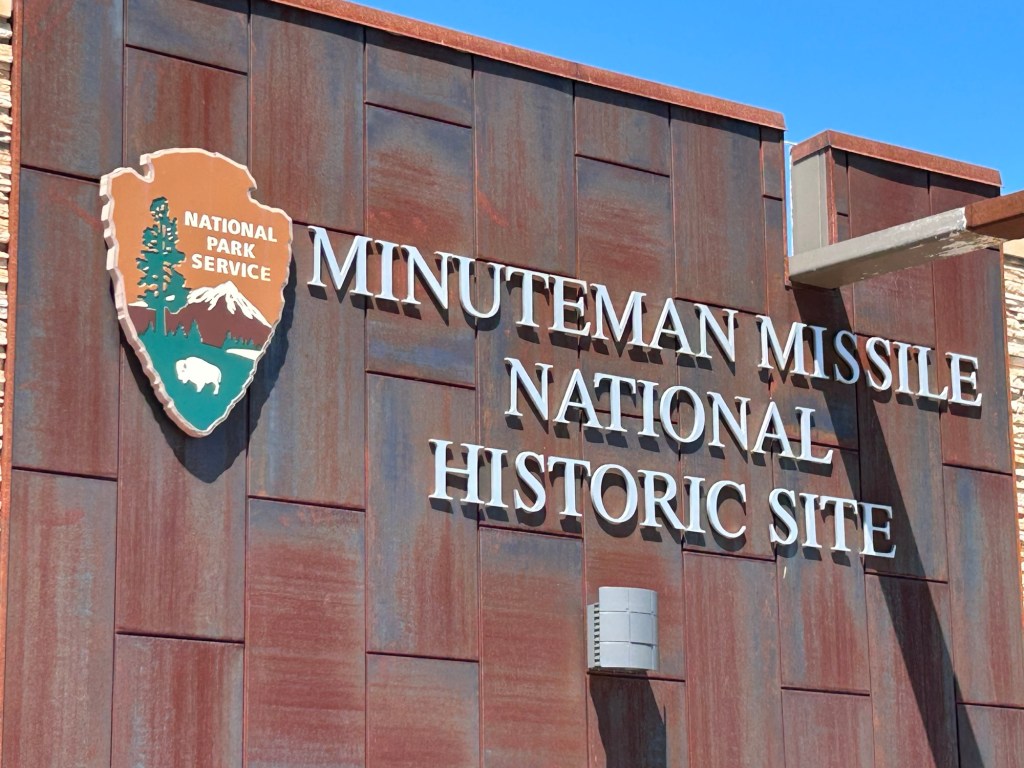
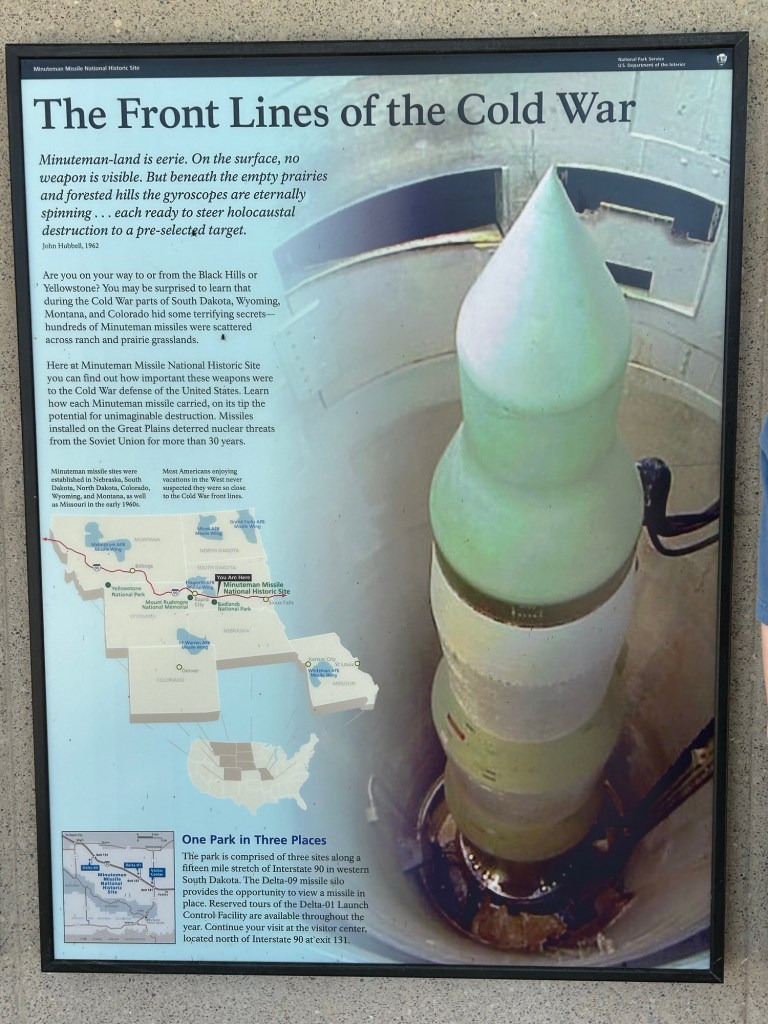
After making the 15-mile journey west on I-90 and taking exit 116, we easily located the decommissioned nuclear missile silo. We drove down a gravel road, found a parking spot, and read the signs that helped us understand what we were about to see.
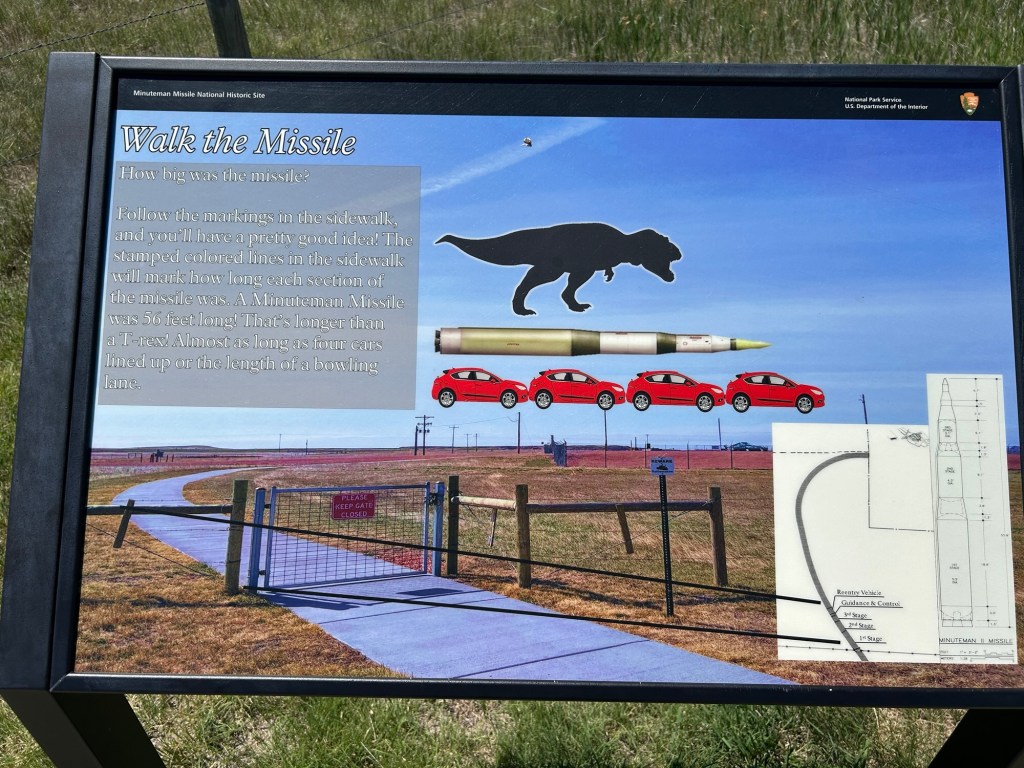
The next pictures shows how each Minuteman Missile was 56 feet tall and buried in the South Dakota cow fields.
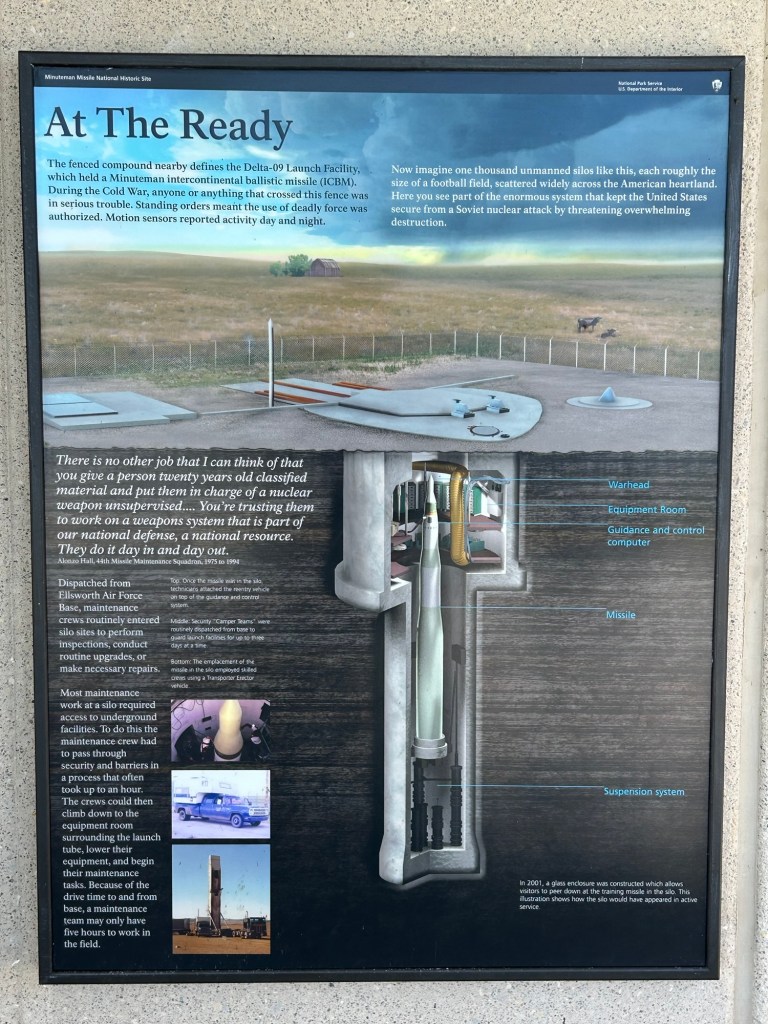
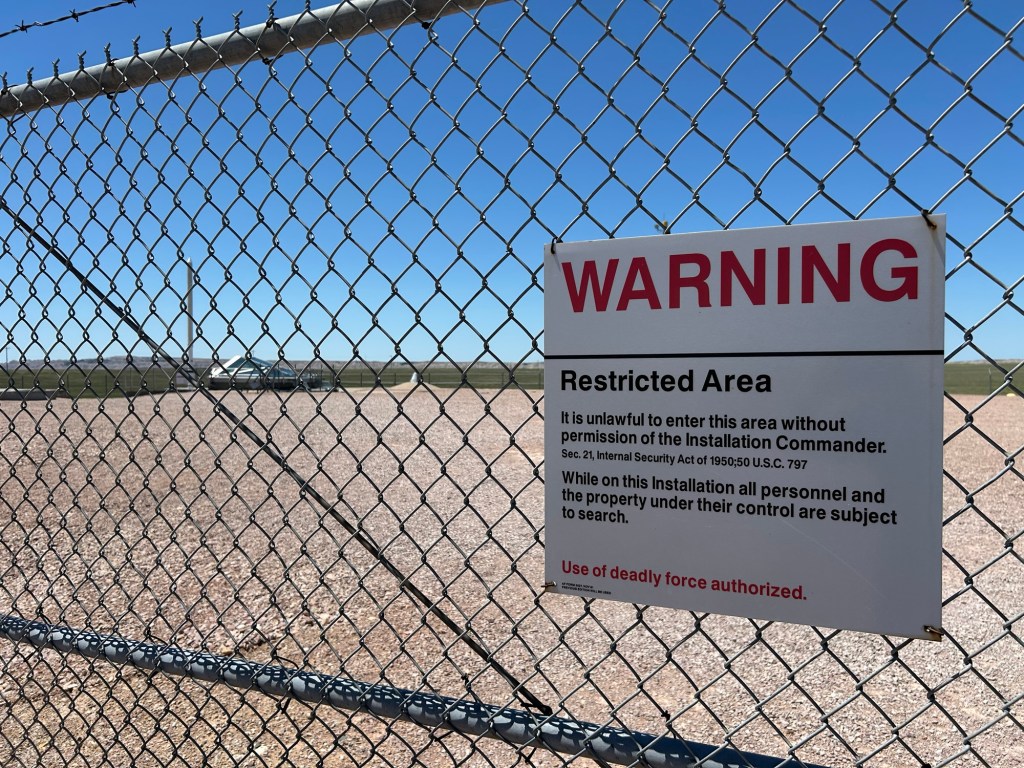
The decommissioned Minuteman Missile/silo was open to the public from 9 AM – 3 PM. Otherwise, this sign warns of deadly force to anyone on this site.
Here’s a video I took of the decommissioned missile.
South Dakota no longer has any active nuclear missiles. However, Montana, North Dakota, and Wyoming have silos like this one, each state having 150 operational missles. Do the math, and you get 450 active land-based Intercontinental Ballistic Missile (ICBM) silos in the United States. But some sources say the U.S. has lowered the number to 400.
So, where does the United States keep the rest of our ballistic missiles? They are on these bad boys! Ohio-Class Submarines!
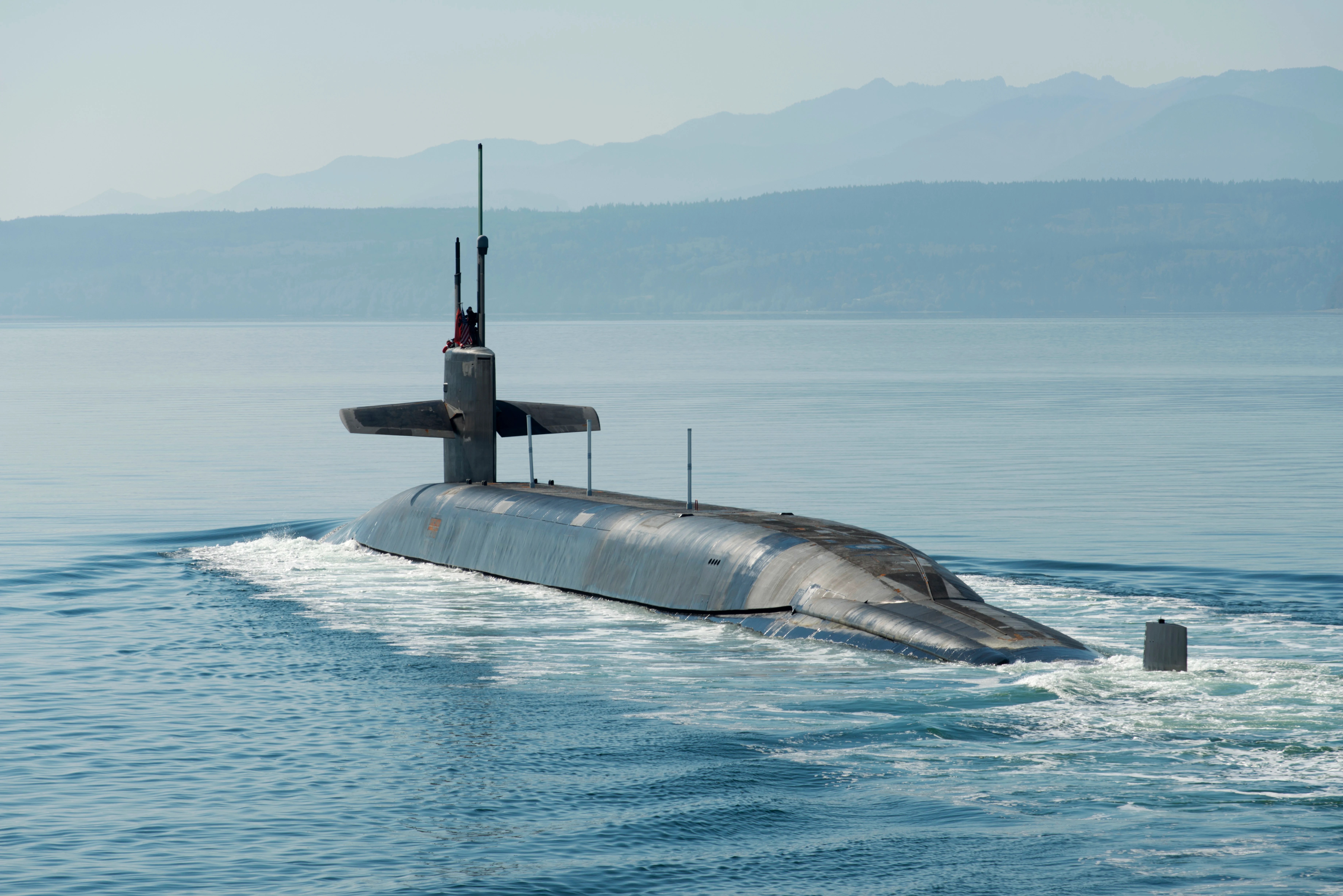
Each of these Ohio-Class submarines can carry up to 20 Trident II Ballistic Missiles (according to this Navy history website). These submarines, which are roughly 2 football fields long, are resting undetected in the world’s oceans, just in case the United States calls for a nuclear strike. If we flex, we probably won’t have to swing.

